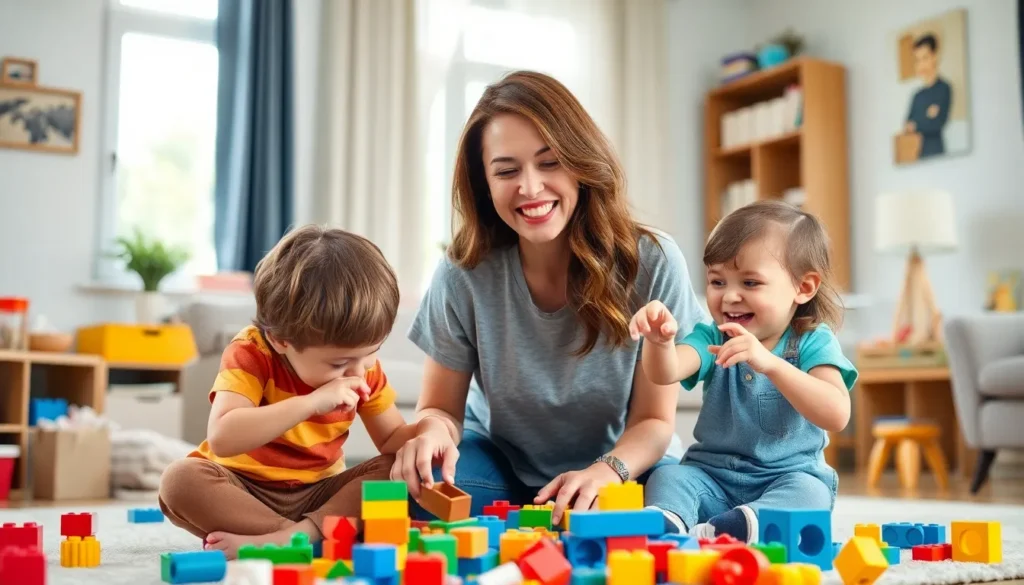

Confidence doesn’t suddenly appear when a child starts school. It develops quietly, day by day, through small experiences that help children feel safe, capable, and valued. From trying something new to navigating social situations, confidence is built long before children can put their feelings into words.
For many families, these early experiences happen both at home and in early learning settings like child care Menai, where children spend significant time learning how the world works and where they fit within it.
Confidence starts with feeling secure
The foundation of confidence is emotional security. When children feel safe and supported, they are more willing to explore, experiment, and take small risks. This sense of security comes from predictable routines, consistent responses from adults, and environments where children know what to expect.
Young children who feel secure are more likely to:
Try new activities without fear
Ask for help when they need it
Recover more quickly from mistakes
Security doesn’t mean removing challenges. It means providing reassurance while children face them.
Encouraging independence in age-appropriate ways
Confidence grows when children realise they can do things for themselves. Simple opportunities to make choices or complete tasks independently can have a big impact.
This might include:
Choosing between activities
Attempting to dress themselves
Helping with small responsibilities
Even when tasks aren’t completed perfectly, the effort matters more than the outcome. Praise focused on effort rather than results helps children see themselves as capable learners.
The role of play in confidence building
Play is one of the most powerful tools for building confidence. Through play, children practise problem-solving, decision-making, and social interaction in a low-pressure way.
Different types of play support confidence in different ways:
Imaginative play allows children to explore roles and emotions
Physical play builds body awareness and self-trust
Cooperative play teaches negotiation and communication
When children control their play, they learn that their ideas and choices have value.
Positive relationships with trusted adults
Children gain confidence when they feel understood by the adults around them. When educators and caregivers take time to listen, acknowledge feelings, and respond thoughtfully, children learn that their voice matters.
Strong adult relationships help children:
Express emotions more openly
Feel comfortable asking questions
Develop trust in their own thoughts and feelings
This emotional support gives children the courage to try new things, even when they feel unsure.
Learning through mistakes, not avoiding them
Confidence isn’t built by getting everything right. It’s built by learning that mistakes are part of growing. When adults respond calmly to errors and encourage children to try again, children learn resilience rather than fear.
Helpful responses include:
Normalising mistakes as part of learning
Offering guidance without taking over
Celebrating persistence
Over time, children begin to see challenges as opportunities rather than threats.
Social experiences shape self-belief
Interactions with other children play a key role in confidence development. Through social experiences, children learn how to share, take turns, resolve disagreements, and build friendships.
Supportive social environments help children:
Develop communication skills
Learn empathy and cooperation
Feel a sense of belonging
Guided social interaction, rather than forced independence, helps children gain confidence at their own pace.
Language matters more than we realise
The way adults speak to children influences how children see themselves. Encouraging language that focuses on effort, curiosity, and improvement reinforces positive self-belief.
Helpful language includes:
“You worked really hard on that.”
“What do you think you could try next?”
“It’s okay to feel unsure sometimes.”
These messages teach children that confidence comes from learning, not from being perfect.
Consistency between home and care environments
Children feel most confident when expectations are consistent across different environments. When values such as kindness, independence, and effort are reinforced both at home and in care settings, children feel more secure and capable.
Consistency helps children:
Understand boundaries more clearly
Build trust more easily
Transfer skills from one environment to another
This sense of continuity supports steady emotional growth.
Confidence grows slowly, but it lasts
Building confidence in young children isn’t about pushing them to be bold or outgoing. It’s about creating environments where they feel supported enough to explore who they are. Small daily experiences, repeated over time, shape how children see themselves.
When children are given the space to try, fail, and try again, they develop a quiet confidence that carries into learning, relationships, and life beyond early childhood.